It's Friday morning and I'm in Auroville, which was not the plan.
The plan was Mahabalipuram, where my parents are, and taking them to the Matrimandir for the weekend. Then I was on a call with Sree yesterday and he said — why don't you come to Pondicherry, and go from there?
So last night I came to Pondicherry.
As usual, it was not intended.
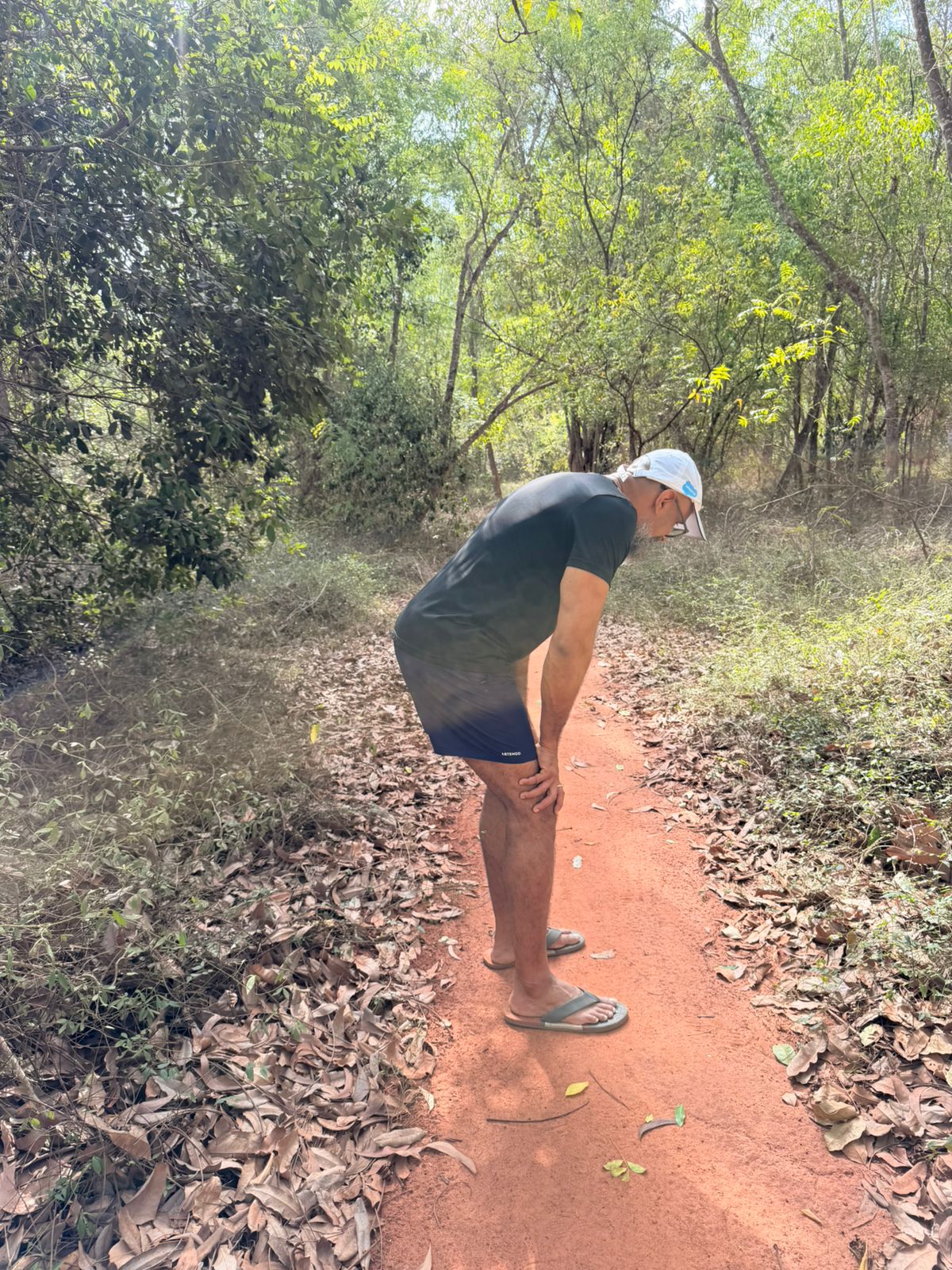
This morning the two of us did our walk. An hour and a half, maybe two. Six kilometres.
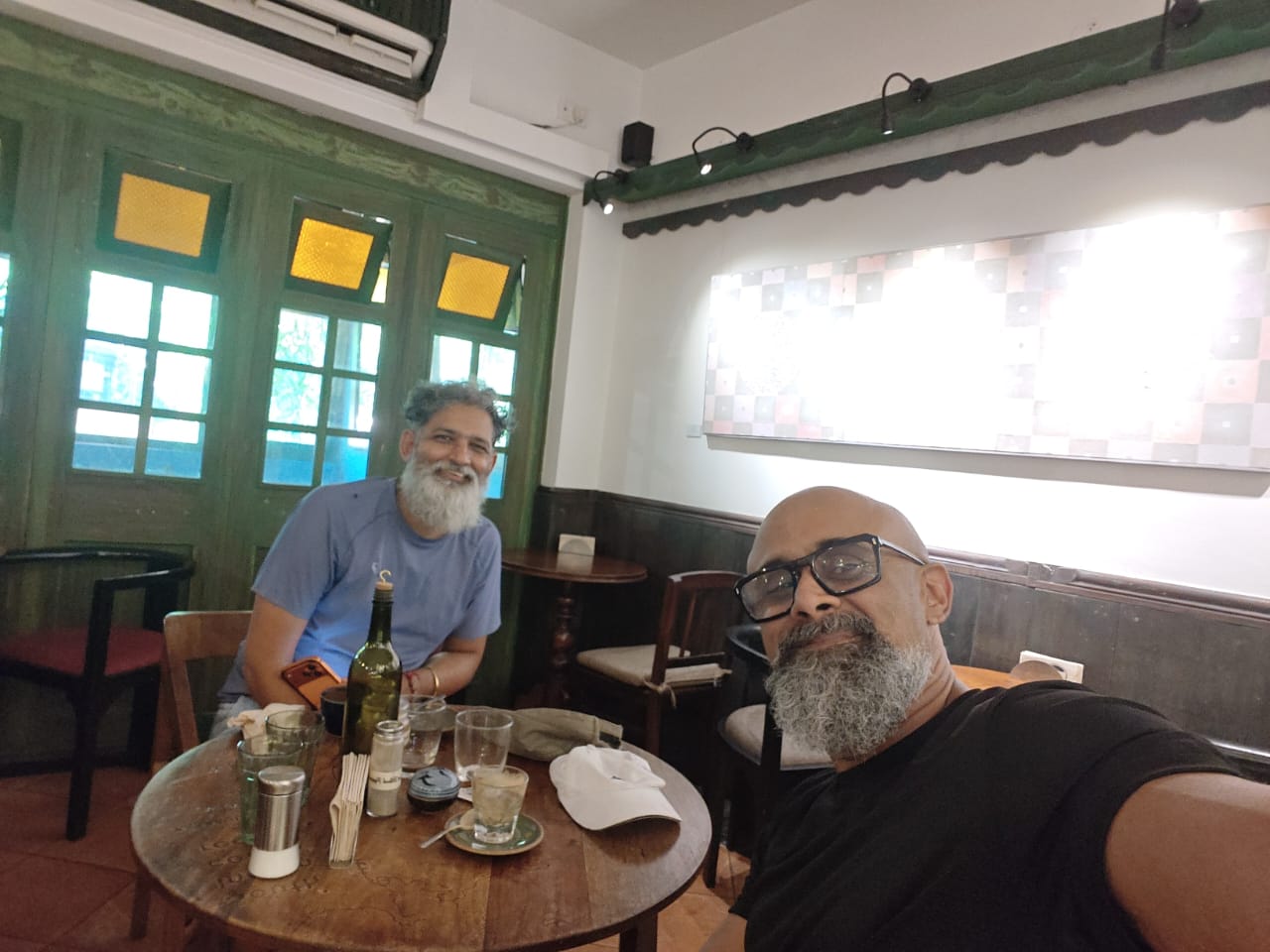
Now we're in a café with coffee in front of us, and we've been talking about everything — what we've done at the company, what we're doing now, the team, the morale, what next.
One of the things we got onto was a physiotherapist called Swati Rajput, who's been working with Niraj.
The way she does physiotherapy is very different from anybody else I've seen do physiotherapy. She's not really working on the muscle.
She's working on your brain — reconditioning it, making it unlearn and relearn the movements it was used to in the past.where in a way she is actually really working on your brain and reconditioning your making your brain unlearn and re-learn the movements that it was used in the past
Correct the posture. Correct the movement. The pain goes.
From there we got onto fractals, because once you've seen them you can't stop seeing them. They're everywhere in the ground. They're everywhere in nature. A water droplet trickling down, splitting into branches.
And from fractals, to the future of AI. What things could look like four years from now.
Then, as usual, the conversation drifted. And it left me with a question I want to put to all of us.
In the new world of AI — should we still be living in the world of resource allocation, roadmaps and prioritisation?so I will just basically close this topic with a very open questions to all of us in the new world of AI should we actually still live in the world of resource allocation road maps and prioritization
Of course it all makes sense. It has always made sense.
But is there a new way to look at it, instead of first-in-first-out and allocations?
Not that we want the other extreme. We should stay cognizant of the vortex of an infinite backlog — that's a real place and people get lost in it.
But as long as we can gauge it, take a call on whether this makes sense and whether it's yielding the right outcome — how quickly can we run it as an experiment and jump on it?as long as we are able to gauge and take a call on whether this makes sense this is yielding a right outcome and how can we do it as a quick experiment and jump on or should we put it in the backlog and wait for the right due moment and do it as and when basically people are available in the traditional sense
Or do we put it in the backlog and wait for the right moment — do it as and when people are available, in the traditional sense?
It's just a floating thought that came into my mind, and I wanted to hear all of us chime in on it.
Have a blessed day. Happy Friday.
A note from the transcript: Swati works on a brain that has to unlearn a movement it has always made. The question at the end is about habits we'd have to unlearn too. Venky didn't join those two things out loud — he just put them next to each other, on the same walk, in the same three minutes.